
22.07.2025
Which Glass for Which Wine?
How the Right Glass Enhances the Character of Alto Adige Wines
Reading time: 6 '
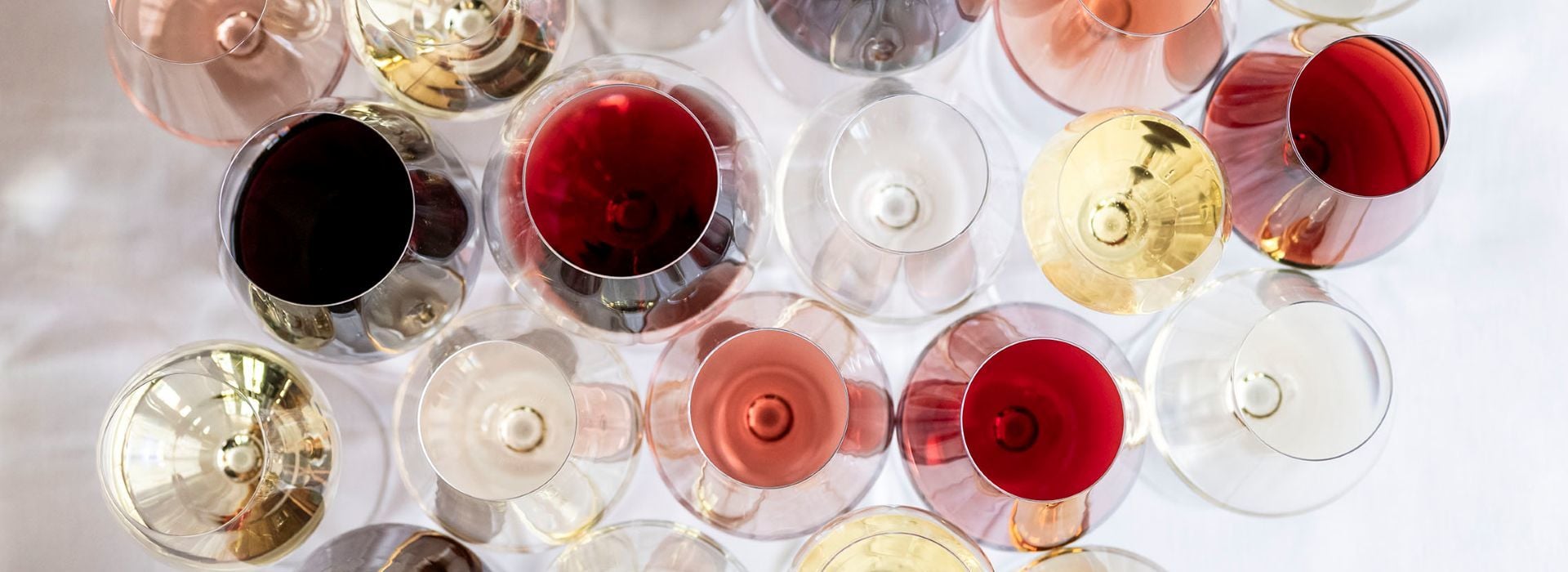
The character of a wine doesn’t just reveal itself in the glass—it’s also shaped by the glass. Shape, material, and size—what might seem like secondary details—have a direct impact on the tasting experience. A good wine glass helps the wine release its aromas, maintain its ideal temperature, and showcase its color. Typical features include a tulip-shaped bowl that narrows at the top, thin and colorless glass, and a long, slender stem.
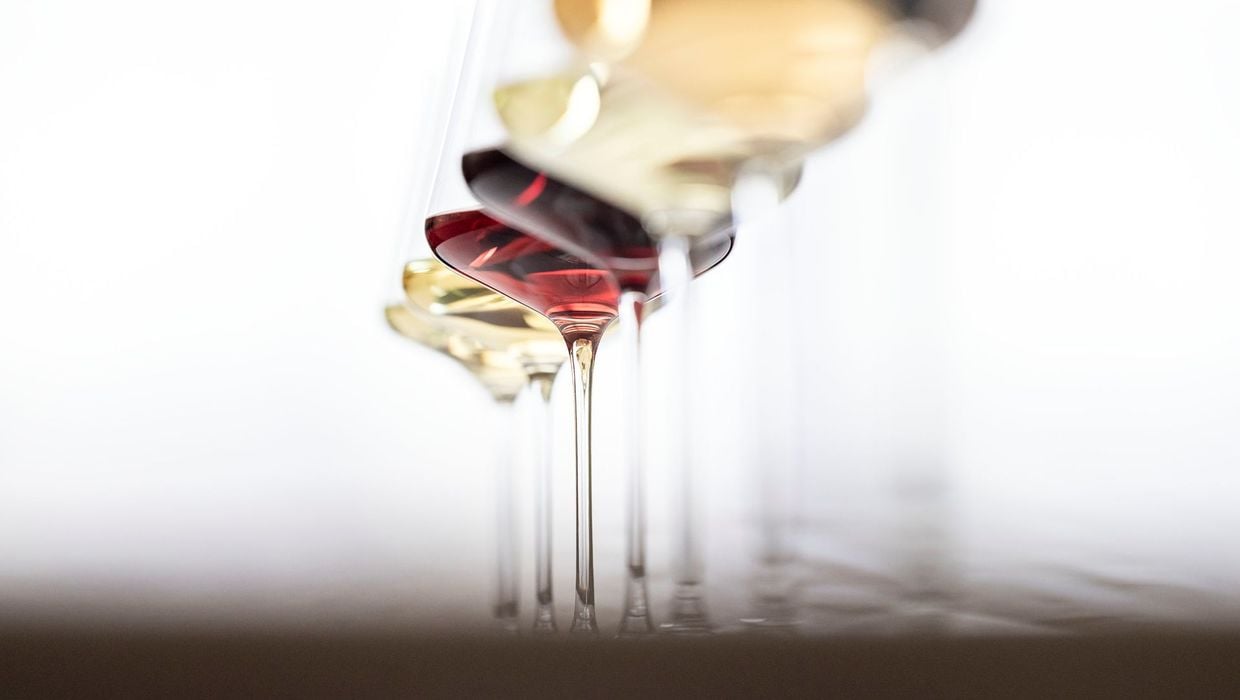
These elements make it possible to swirl the wine without spilling it. This introduces oxygen, allowing the aromas to open up, so that the nose can pick up more subtle nuances. The stem also helps prevent the wine from warming up from hand heat and preserves the clarity of the glass by avoiding fingerprints.
While a universal glass is practical for everyday use, it’s worth taking a closer look at different shapes—especially when serving distinctive wines like those from Alto Adige.
These elements make it possible to swirl the wine without spilling it. This introduces oxygen, allowing the aromas to open up, so that the nose can pick up more subtle nuances. The stem also helps prevent the wine from warming up from hand heat and preserves the clarity of the glass by avoiding fingerprints.
While a universal glass is practical for everyday use, it’s worth taking a closer look at different shapes—especially when serving distinctive wines like those from Alto Adige.
Three Glasses – Three Wine Styles
Fresh White Wines
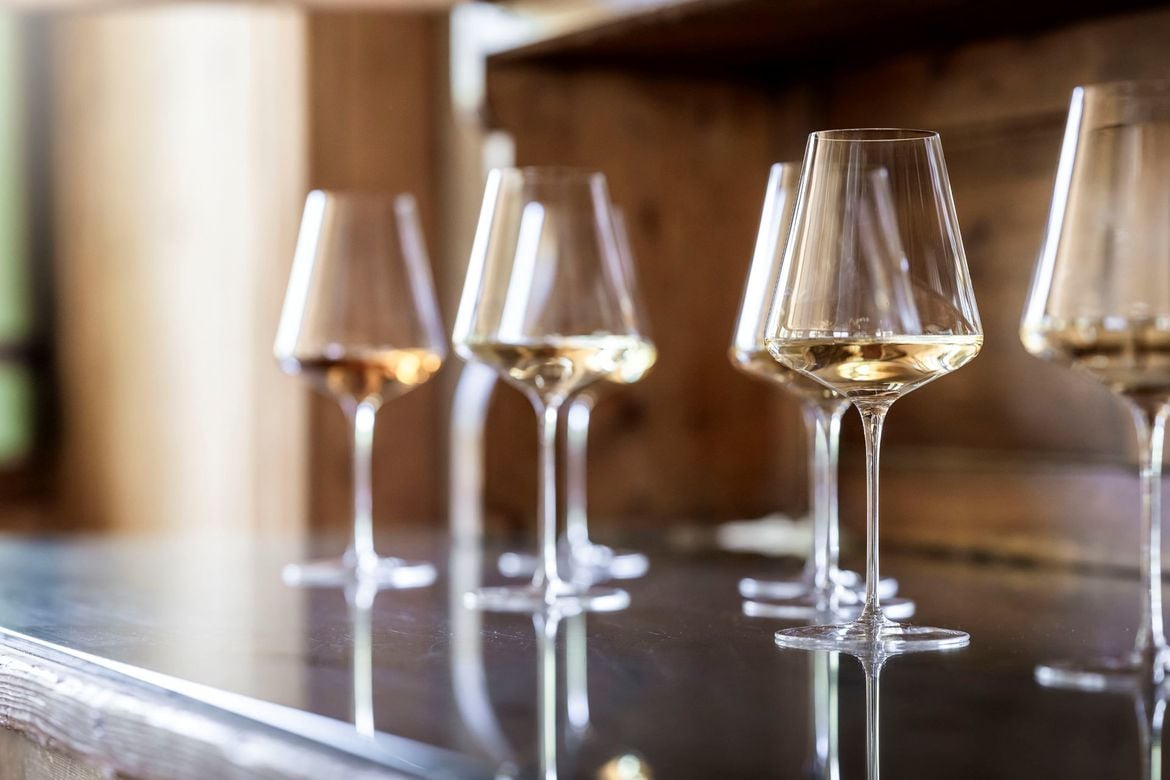
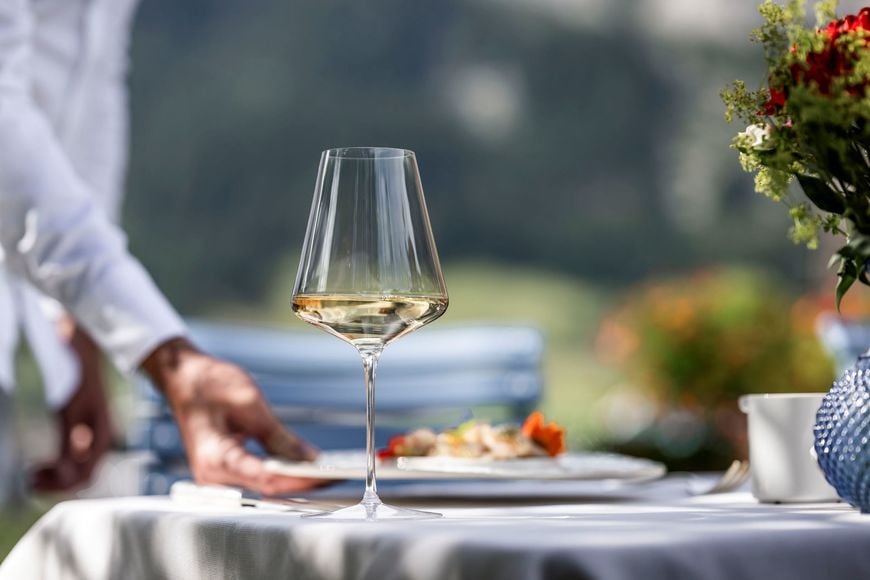
For wines like Sauvignon Blanc or Pinot Blanc from Alto Adige, a slender, medium-sized glass is ideal. It preserves freshness and lightness, highlights delicate acidity, and concentrates fruity aromas in the center of the glass. Sylvaner and Müller-Thurgau also show their best side in this type of glass.
Structured Red Wines
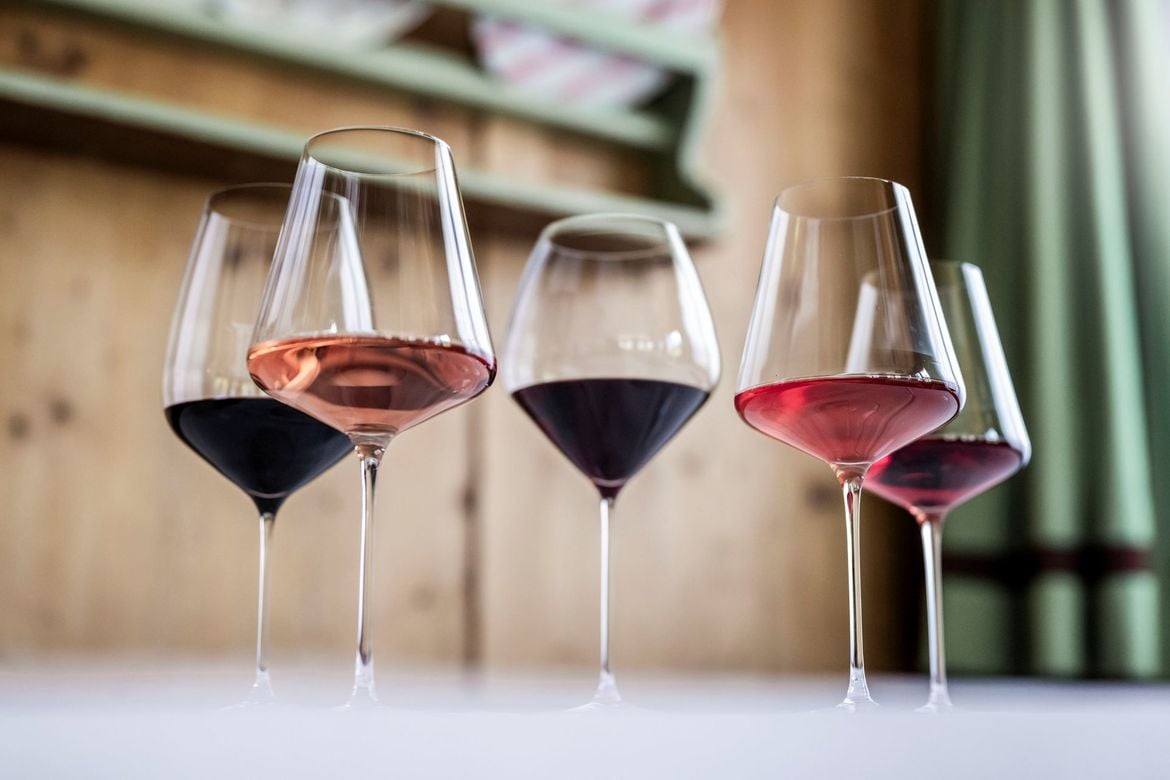
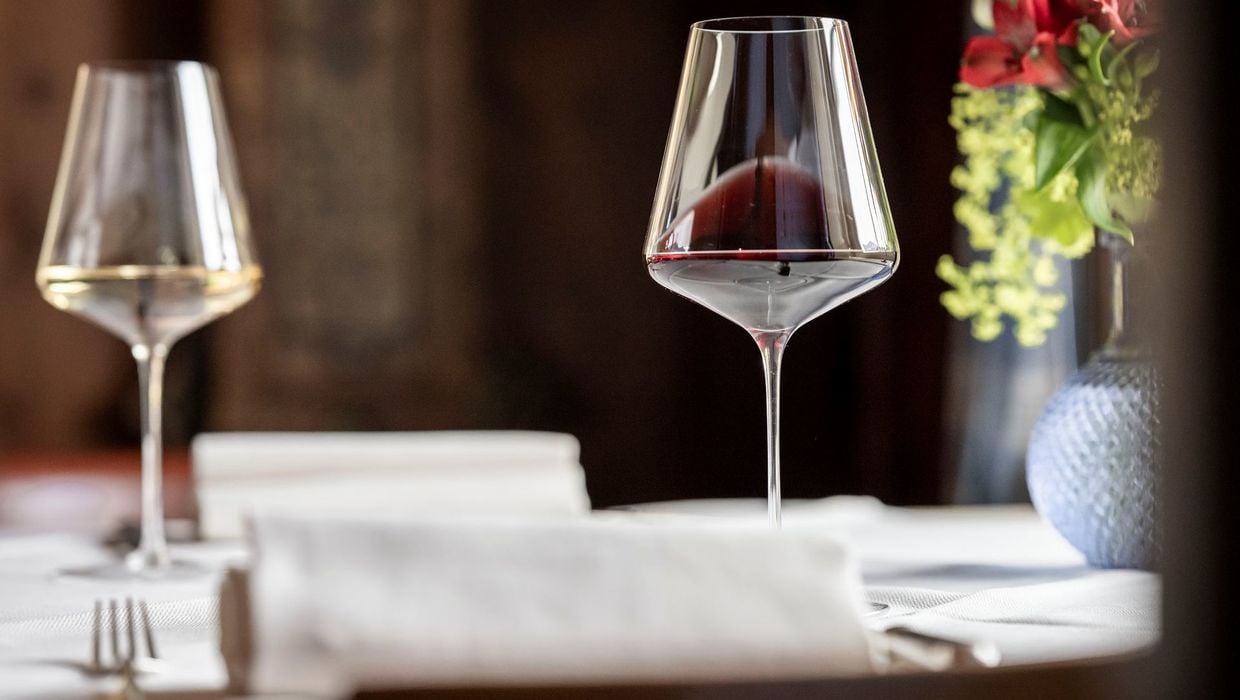
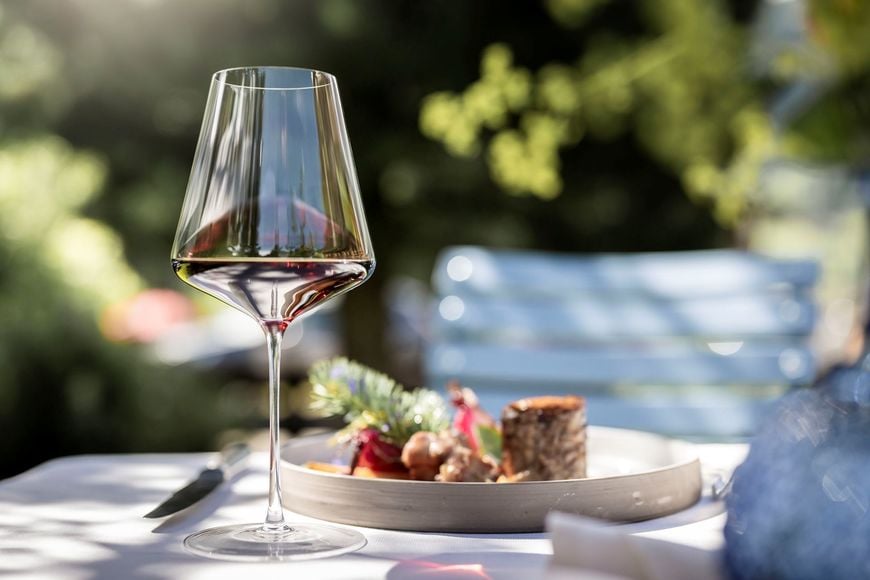
Full-bodied reds like Lagrein, Pinot Noir or Cabernet benefit from large, rounded glasses. These give the wine room to breathe and bring out its aromatic complexity—from dark berries to spicy notes. Schiava/Vernatsch, on the other hand—a classic Alto Adige red with a lighter body—expresses itself better in narrower, more tapered glasses.
Sparkling Wines from Alto Adige
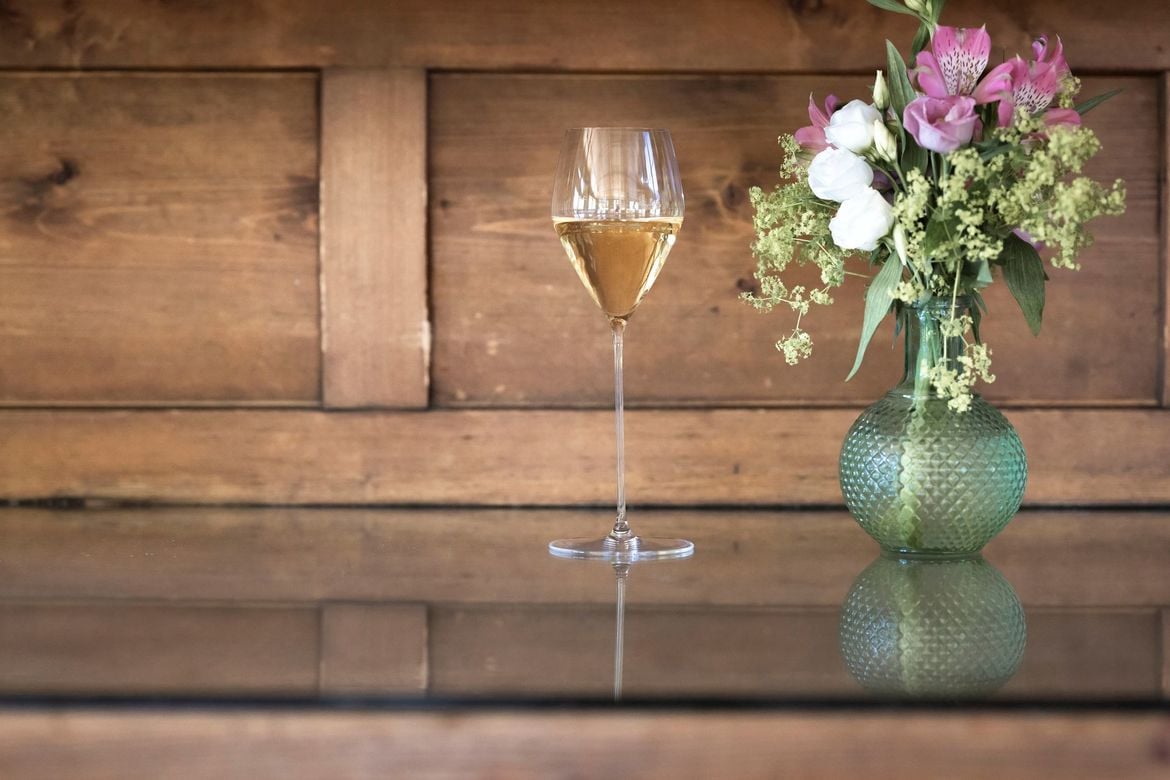
Alto Adige DOC sparkling wine is made using the Metodo Classico (traditional method). To preserve its fine perlage—the steady stream of carbon dioxide bubbles—and to fully express the bouquet, a tall, slender glass with a narrow opening is ideal. Wide coupe glasses, by contrast, allow too much carbonation to escape.
Fresh White Wines
For wines like Sauvignon Blanc or Pinot Blanc from Alto Adige, a slender, medium-sized glass is ideal. It preserves freshness and lightness, highlights delicate acidity, and concentrates fruity aromas in the center of the glass. Sylvaner and Müller-Thurgau also show their best side in this type of glass.
Structured Red Wines
Full-bodied reds like Lagrein, Pinot Noir or Cabernet benefit from large, rounded glasses. These give the wine room to breathe and bring out its aromatic complexity—from dark berries to spicy notes. Schiava/Vernatsch, on the other hand—a classic Alto Adige red with a lighter body—expresses itself better in narrower, more tapered glasses.
Sparkling Wines from Alto Adige
Alto Adige DOC sparkling wine is made using the Metodo Classico (traditional method). To preserve its fine perlage—the steady stream of carbon dioxide bubbles—and to fully express the bouquet, a tall, slender glass with a narrow opening is ideal. Wide coupe glasses, by contrast, allow too much carbonation to escape.
Caring for Your Glassware
Wine glasses are more than just accessories and, in order to perform their role properly, they need the right care. A neutral, fragrance-free detergent is best—whether washing by hand or in the dishwasher, depending on the type of glass. Many machine-made glasses are dishwasher safe, but more delicate models are not. What matters most is avoiding lingering odors that could interfere with the olfactory experience.
Before pouring, it’s a good idea to take glasses out of the cabinet and let them “breathe” a little. Storing them in the open, without cardboard or packaging, helps ensure that the wine’s fragrance remains pure.
A good glass won’t turn a mediocre wine into a great one. But it will help you appreciate the subtle differences that make Alto Adige wines unique. It highlights what grape variety, terroir, and skilled winemaking have brought to life—and shows that true enjoyment is not just a matter of taste, but of form as well.
Wine glasses are more than just accessories and, in order to perform their role properly, they need the right care. A neutral, fragrance-free detergent is best—whether washing by hand or in the dishwasher, depending on the type of glass. Many machine-made glasses are dishwasher safe, but more delicate models are not. What matters most is avoiding lingering odors that could interfere with the olfactory experience.
Before pouring, it’s a good idea to take glasses out of the cabinet and let them “breathe” a little. Storing them in the open, without cardboard or packaging, helps ensure that the wine’s fragrance remains pure.
A good glass won’t turn a mediocre wine into a great one. But it will help you appreciate the subtle differences that make Alto Adige wines unique. It highlights what grape variety, terroir, and skilled winemaking have brought to life—and shows that true enjoyment is not just a matter of taste, but of form as well.
© Credits: Consorzio Vini Alto Adige/Alex Filz
Another taste?
More from the world of Alto Adige wine